The Problem With Defining A Native Species
The Problem With Defining A Native Species
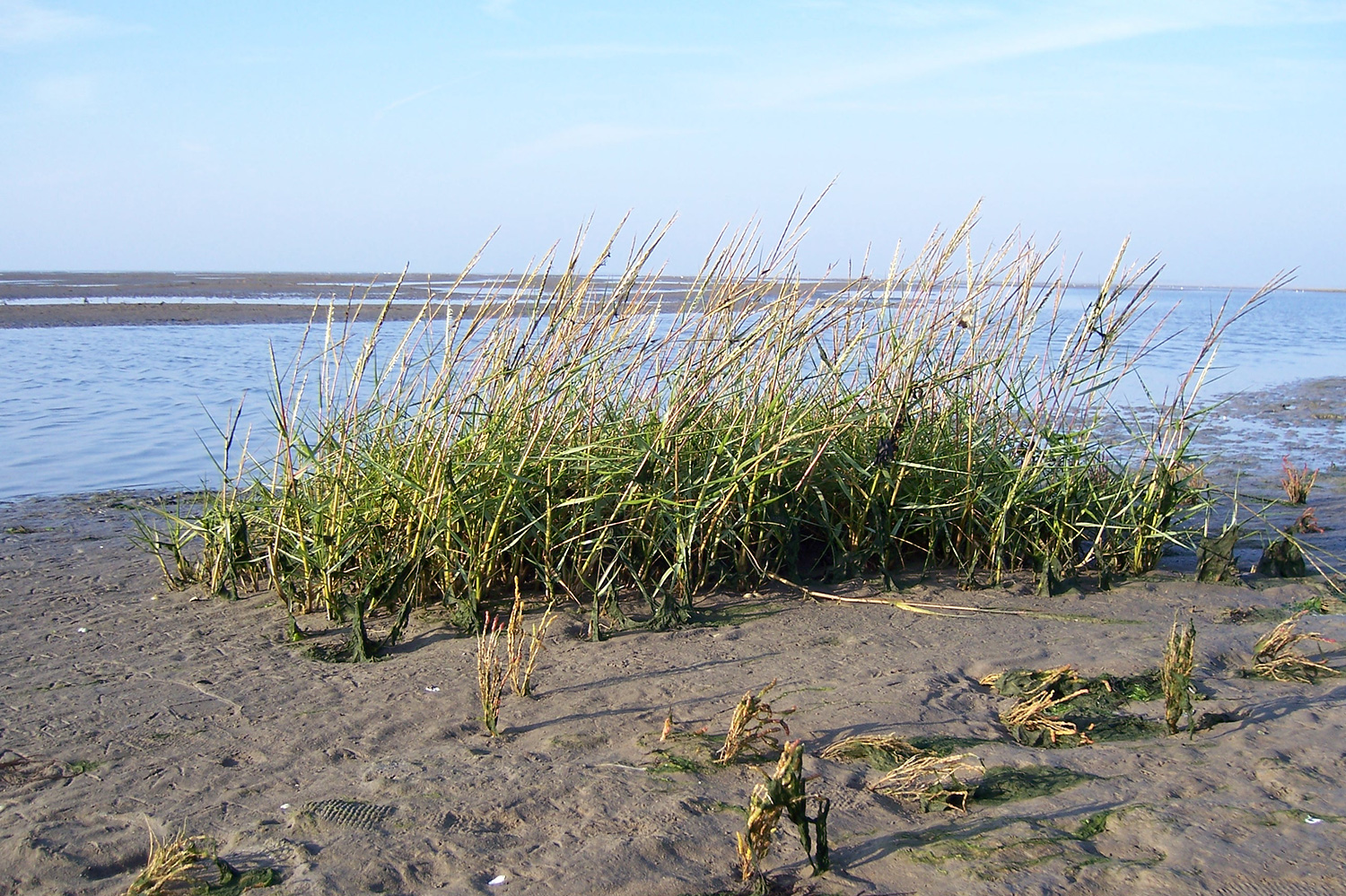
(Wikimedia Commons Image of a Salt Marsh)
This unassuming grass pictured is Spartina anglica; as you may guess from the name anglica, it evolved in Britain. This makes it nice and easy to confidently say, this species is not an invasive species here in the UK… except by some definitions of an invasive species it is. Although most people’s idea of an invasive is something brand new and exotic taking over the land, like say, Japanese Knotweed, it’s hard to draw a line on how recently something has to have arrived to be an invader. Spartina Anglica only developed 200 years ago, and several of England’s marshes in which it grows are over 500 years old. There’s been marshland here for thousands of years, so if you could ask the marsh what it thinks, it’d tell you that this grass is a very recent new visitor.
What this all boils down to is the impossibility of answering the question “what’s meant to be here”. In conservation/restoration, it’s relatively easy, and indeed important, to point at things that aren’t meant to be in an ecosystem, like a tarmac road or Japanese Knotweed; but due to the ever-changing nature of the environment, it’s much harder to pick an exact image of what that location “should” be.
Around the world, our perceptions of what things belong where don’t quite match the history.
The Sicilian lemon? Imported to the continent by the Romans. The delicious pizza? Topped with tomatoes that didn’t exist in Europe til the 16th century.
Picture the English countryside, open grassland, and rabbits grazing. The grassland was once forest, often within the last 1000 years, and those rabbits? Well, we’ve got the Romans to thank again, as they brought them to Britain when they first crossed the channel.
Picture a traditional American plain, a cowboy with a lasso herding his cattle atop a mighty horse. The first cow stepped foot in America in 1494, and the horse in 1519.
That’s enough examples, I could go on forever, but hopefully the point is clear now. Wherever you look, our landscapes are heavily altered by human history, and those alterations have become so natural to us that it’s easy to forget things weren’t always like this.
Who Cares?
One question all of this does ask, though, is why does it matter anyway, whether a grass has been somewhere for 200 or 20000 years and who introduced rabbits where. Regardless of what you think and want to call them, the species are all here now, so you may as well get on with things right? Well, understanding our history is one of the best tools that ecologists have when it comes to assessing the future. There’s 2 key branches of ecology that both wrestle with the native species problem: Conservation and Rewilding. In rewilding, you have to choose a period of time to “go back to”, which stares down this challenge of ever-changing landscapes. I will however, focus on conservation here, as I have a future piece coming exclusively on rewilding. It’s been shown that conservation of at-risk species, and also the control of invasive species, are both exponentially easier when the risk is spotted early. To spot an invasive early, you need to be intimately familiar with what’s already in a region. Meanwhile, on the species at risk front, understanding what conditions a species does best in, how long it’s been in the local region and which other introductions and extinctions have affected its population is essential. If we take, for example, the Egyptian Goose, mentioned in a previous column piece, it’s understood that warming in Britain is creating more favourable conditions for them that closer aligns with their native conditions. This increase in population will pose risks to other freshwater species, especially those that share nesting grounds or also eat the same aquatic vegetation. If we just brushed off the Egyptian goose as basically native now because it’s been here for 400 years, we wouldn’t be able to appreciate the way climate change will impact them and their rivals in that habitat. The native species problem can also assist conservation in the opposite manner, if we can be assured a species has endured 20,000 years in a region that has undergone other significant changes, we know they are less likely to need protection from any threats similar to those it has already previously faced. This allows resources and money in conservation to be placed more efficiently on the species and ecosystems that need it.
In Conclusion
Hopefully, if it wasn’t something you had previously considered, you are now more consciously aware that the landscapes we walk through, species we see and the species we don’t, are all in flux. The changes that occur from humans and naturally (although especially from humans in the last 2000 years) make it really difficult for those working professionally in applied ecology to pinpoint exactly what should and shouldn’t be in places and what the true target for restoration should be. In my opinion, conservation, therefore, like many disciplines, actually has subjectivity. This might make you uncomfortable, like the idea that statistics or maths is subjective, but subjectivity doesn’t mean it can be just made up, or less legitimate; just that different arguments can be made on the best ecological uses for a piece of land, largely due to the multiple different ways it’s been of ecological value historically. If you’ve previously viewed conservation as just a set of rules to apply, I think that shifting your mind to viewing it this way will reward you with a greater understanding of why landowners, charities and conservation trusts make the choices they do.